Heart
The human heart, what is heart pain and chest closure or closed body syndrome?
❤️Heart pain in osteopathy
In osteopathy, “heart pain” means more than just chest pain.
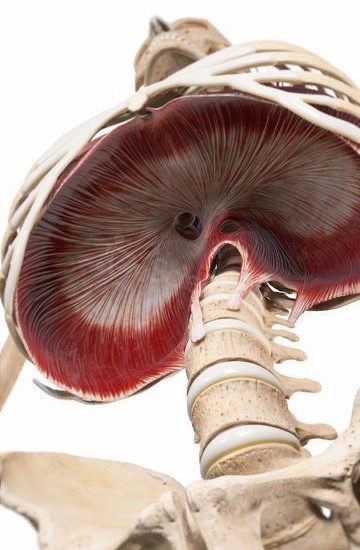
It refers to an energetic or somatic blockage in the heart area, which can occur: due to emotional trauma (feelings of grief, disappointment, abandonment), due to prolonged stress or control, due to physical posture (e.g., a collapsed chest), due to tension in the diaphragm, sternum, or ribs
How an osteopath perceives heart pain:
The osteopath feels that the tissues around the heart are stiff, “cold,” or pulsatile, even though the physical heart is healthy. Energy does not move freely through the connections of the chest, neck, and abdomen — especially through the breastbone (sternum) and diaphragm.
Such a person may: hold deep sadness or pain that is not expressed, feel pressure in the chest, difficulty breathing or “heaviness in the heart”, speak softly or shallowly, breathing only with the chest, stand or sit slightly forward “protecting the heart”
Osteopathic interpretation:
The heart is the center that connects the physical and emotional person. When the chest is tense, the “movement of the heart” is limited – both physically (circulation, breathing) and energetically feelings, joy of life. The osteopath tries to free the chest and diaphragm so that the life energy (prāna, qi) can move freely again.
2. Closed Body Syndrome
This is not an official medical diagnosis, but a metaphor used in osteopathy and body therapies for a person whose body is physically and energetically “closed”.
Symptoms: The chest, pelvis and diaphragm are tense – the body seems “locked”, Breathing is short and shallow, Movement is stiff, controlled, not flowing, Often cold hands and feet (circulation restrictions), Facial expression is neutral or controlled, emotions are rarely expressed, There is no “flow” from the body – when touched, the body feels dense, not alive
Psychosomatic content:
It usually arises from prolonged self-protection or emotional closure.
The body “locks up” to not feel pain, but at the same time it also locks out joy, lightness and contact.
An osteopath calls this the “closure reaction” – the body’s protection from an experience that is too strong.
Osteopathic approach:
The work begins by restoring a sense of security in the body – with a touch that is warm, slow, permissive.
The goal is not to “force open”, but to allow the body to open itself.
The work often takes place in the chest, neck, diaphragm and sacrum.
Patients may start breathing deeply, shivering or even crying during the session – a sign that the energy is starting to move again.